The self-hardening loop
A check that catches a failure hands it straight to the AI that owns that part, which fixes it on the spot and makes the check stricter.
What it gives you
- A failure reaches the owner of the broken part as a note in that desk’s inbox, within minutes, instead of waiting for a person to notice.
- The same failure is raised once a day at most, so a lasting problem is one note, not a flood.
- Every fix ends by tightening the check, so the house gets harder to break each time it breaks.
Watch
How it works
- Catch. A check is built into the part it guards: a validator that reads a file when it is loaded, a hook that runs when an action is attempted, or a script on a timer. The check knows what a broken input looks like.
- Raise to the owner. When the check fails it does not stop at a red line. It writes one note into the inbox of the desk that owns the broken part, saying what failed, why it matters and how to re-check. The note is deduplicated, so the same failure is sent at most once a day.
- Fix live. The desk that designed the part reads the note and repairs it in the same working session, while the context is still fresh. A person is pulled in only for a product decision.
- Tighten the check. The last step of every fix is to ask what would have caught this sooner, and to add that to the check. The failure becomes a permanent lesson instead of a one-off repair.
In practice
- Tickets and projects are written in a strict structure. Tickets, batches and project files follow a fixed layout that scripts read, both to hand work to builders and to build the higher-level views. The project view in the cockpit, and every feature that bubbles up into it, is built from that structure. The project ingest check reads each file when it is loaded, and the ticket and batch validators check theirs before work is dispatched. When the syntax breaks, the card shows a red line saying exactly what is missing, and one note a day goes to the captain’s inbox. The captain fixes the file, then fixes the engine so the same break is caught earlier. The aim is that nobody gets an email about it: the captain simply fixes it and makes the checker stricter.
- A finished task that fails its check. When a desk marks a small task done, a checker confirms the task states what was verified and what concerns remain. If it does not, the checker writes the reason into that desk’s inbox, and the desk completes the task properly instead of leaving it half-finished.
- The documentation itself. Every page of these docs records when it was generated and a fingerprint of each file it was built from. A daily check compares the fingerprints against the files as they are now. When a skill or script a page describes has changed, one note listing the stale pages goes to the captain’s inbox, and the pages are regenerated.
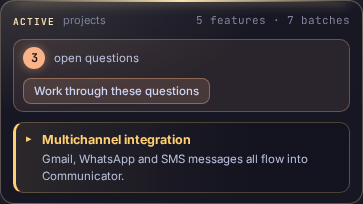
The cockpit project card. Each feature on it is read straight from the project file, which is why that file’s structure is checked.
With models in the loop, a failure can never be ruled out, only made rarer. So each catch moves more of the work into plain scripts, and the models need less human direction every time.
Where the bubble goes
This is the moment a failure stops being a red line and becomes a note to the owner. The function below builds a key from the project and its exact failures, skips the note if that key was already raised in the last day, and otherwise writes one message into the captain’s inbox.
const key = `${slug}:${crypto.createHash('sha1').update(problems.join('\n')).digest('hex').slice(0, 10)}`
const state = readState()
if (state[key] && now - state[key] < DAY) return null   // already raised today
const text = [
  `The project "${slug}" is not ingestible by the Universe, so its project card shows a red "not ingestible" line.`,
  '',
  'Failures:',
  ...problems.map((p) => `- ${p}`),
  '',
  'Why it matters: the Universe project card is built only from the Features, their Serves slugs and the Why bullets they point to.',
  // ...
].join('\n')
out = execFileSync('node', [INBOX_WRITE, '--from', 'evolution', '--to', 'slopdog', '--slug', `project-ingest-${slug}`, '--text', text], { encoding: 'utf8' }).trim()
state[key] = now   // remembered, so the same failure is not raised again for a day
Parts
1 hook · 1 script. Each part has its own page.
Hooks
-
Squashes turn commits.
Scripts
-
Checks done quick task.
Also built on
These parts belong to other features, and each one is a link in this loop.
-
Checks ladder hardcodes.
-
Queues unverified tickets.
-
Guards shared tree.
-
Fails a test that changed the shared trees.
-
Tells the Captain once when a sync fails.
-
Writes desk inbox.
-
Appends lesson.
Last generated 2026-11-25